
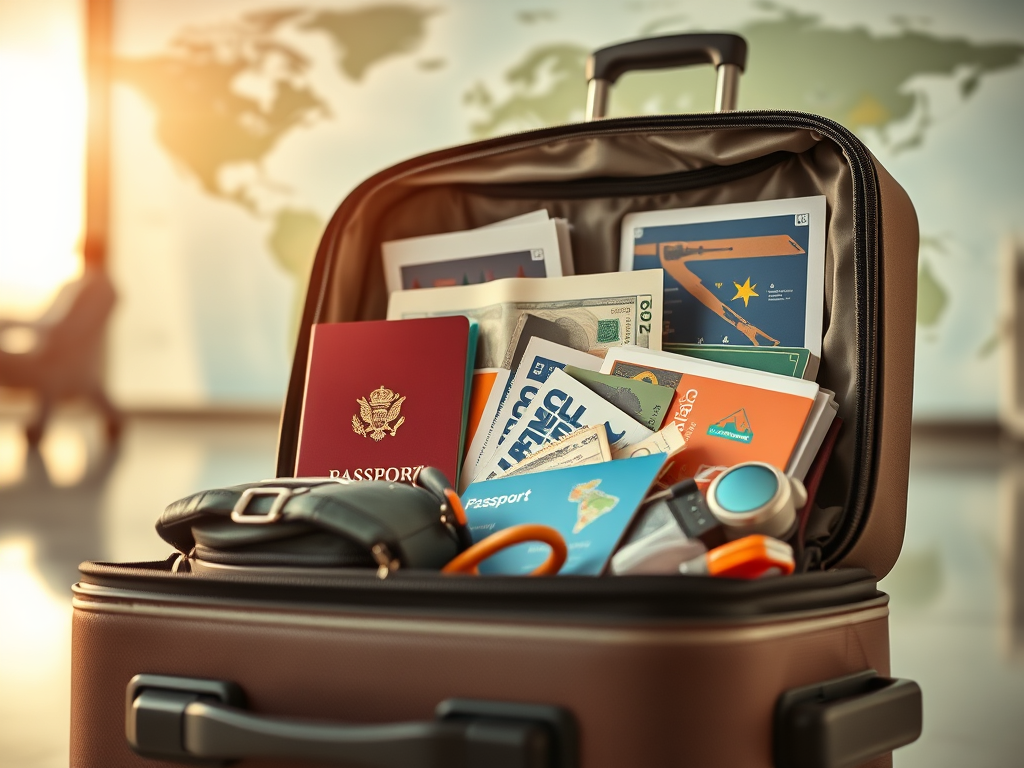
Whether you are traveling internationally for the first time or the millionth time, it’s important to follow a checklist to ensure you have everything you need before leaving. Below is our checklist that will help you plan international travel. Further details surrounding this list are included below.
- Research Final Destination
- Have a Valid Passport
- Get the Visas Needed
- Be Up-to-Date in Vaccinations
- Get Global Entry & TSA Pre-Check or Mobile Passport App
- Order Local Currency
- Notify the Bank
- Get a Travel Card
- Obtain an International Driver’s License
- Print Out Important Documents
- Get Converters
- Bring Portable Chargers
- Add Essentials to Carry On
- Check Baggage Allowance
- Check your Cellphone Plan
- Register in STEP
- Enroll in Travelers/ Health Insurance
- Check if You Can Bring Your Prescription
- Create a Packing List
1. Research Final Destination
Before embarking on an international trip, you will want to research your final destination. This will alert you to which tickets you need to book in advance, what Visas you may need, and safe areas to stay.
You’ll also want to research cultural norms and overall tips for the country you are visiting. Below are some travel guides we have created that could aid in your research:
2. Have a Valid Passport
A valid passport is the most important thing to check off your list when you plan international travel.
However, it’s not only important for this to be valid, but your passport cannot expire within six months of your trip.
3. Get the Right Visas
Before departing for your international trip, be sure to figure out which Visas you may need. In some cases, obtaining a Visa can take a few months so this will need to be factored in before you book your flight.
4. Be Up-to-Date in Relevant Vaccinations
Some countries will require vaccinations prior to departure. Be sure to visit the CDC website to keep up-to-date on what is needed before you leave.
5. Get Global Entry and TSA Pre-Check
TSA pre-check and global entry will make your life much easier. For global entry, you can skip the long customs line when coming home. TSA pre-check allows you to forgo the long security lines in the US.
Pro-Tip: When getting Global Entry, you will automatically get TSA Pre-Check, so it makes sense to focus on getting Global Entry.
However, if you don’t have time to get Global Entry and TSA Pre-Check before you leave, you can download the Mobile Passport App. Select airports in the US offer this now, which will make the customs line faster when your return home. You fill out the relevant information on your phone instead of via one of the machines or a paper form. This cuts the time down when waiting on line.
6. Order Local Currency
Not all countries are as reliant on credit cards as the United States. Small businesses and boutiques in certain countries may not even take credit cards.
However, getting foreign currency doesn’t have to be complicated. If you are traveling to a place where is recommended to carry some local currency, we recommend ordering some from your bank in advance.
Pro Tip: You should use local currency at shops and vendors. However, all large purchases such as hotels and rental cards should be done on a credit card (not a debit card). This offers you more protection in case something should go wrong.
7. Notify the Bank
My cards no longer require me to do this, since they use algorithms based on my purchase history to determine if I am traveling or not.
However, your local bank may still require you to notify them. If they do, be sure to contact them, since the last thing you want to happen is for your card to get shut down while traveling.
8. Get a Travel Card
A travel credit card is useful to accrue points, which can be used toward future flights and trips. As noted above, we’d also recommend putting all big purchases on a credit card. This includes car rentals and hotels.
SDanck and I had booked a car through a what we believed to be a reputable company in Spain. However, they upcharged us hundreds of dollars, resulting in a heft bill. Since this was charged to our credit card, we were able to get the money back without much trouble.
When traveling, you should also consier your debit cards, since getting money via an ATM is one of the best ways to obtain local currency. Some debit cards offer no transactions with on foreign ATMs, while some banks have partnerships, making it vital you only use partner ATMs.
9. Obtain an International Driver’s License
International driver’s licenses are required for countries such as Greece. Luckily, they are easy to obtain and don’t necessarily even require a visit to the DMV. Our recommendation: Become a AAA member and get one through one of their branches. It takes 5 minutes and costs about $25.
10 .Print Out Important Documents
In case you lose Wifi or phone battery, it’s always good to have printed versions of important information and documents. This includes hotel stays, tickets, and copies of passports.
Don’t have a printer? You can usually print items at a local Staples or Fedex.
11. Get Converters
This is essential to pack, since it is hard to get the right converters once you leave the country. If you forget to pack them, you can also usually get them at the airport before boarding your flight.
Please note: For certain appliances such as hair dryers, you will also need an international version. Not only will you need the converter to plug it into the wall, but the ability to change the voltage on the device itself. Be sure to research before packing what converters you will need and what appliances can be used with which converters. Please also read all instructions before using.
12. Bring a Portable Charger
Not all airports or airplanes will have outlets for you to charge your phone. It’s better to be safe than sorry (especially on a long flight!).
13. Add Essentials to Carry-On
Everyone’s worst nightmare is baggage getting lost or arriving late. You want to plan for this scenario, should it happen to you.
Include toiletries, such as contact lens solution, toothbrush, and soap in your carryon. Be sure to also pack at least one change of clothes and underwear. If you are traveling for an important even (such as a wedding), we also recommend including that outfit in your carry-on if possible.
Pro Tip: We recommend adding a luggage tracker to your checked bags, so you can see if they reached their final destination. If they didn’t you can see on your phone where they are located.
14. Check Your Baggage Allowance
You should check your baggage allowance across all flights before booking and packing.
Last year, I was on my flight home to the US with Lufthansa. I could overhear a couple speaking to a representative about their baggage fees. One of the partner airlines, they had originally traveled with had a higher allotment than Lufthansa. This resulted in huge fees for them on their way back. It’s so important to read the terms and conditions for bags in detail before booking and packing for a flight.
Even if you plan on only traveling with a backpack, you will need to research the airline’s policies. Carry-on bags are also often weighed in Europe (which isn’t as common in the United States). Budget airlines in Europe, such as Ryanair, will also often monitor bag size prior to takeoff. As a result, your big carry-on bag may have to be checked if you don’t plan ahead.
15. Check Your Cellphone Plan
Having a working cellphone while abroad is a game-changer!
If you are traveling in a group, one or two cellpones could be enough and we recommend having everyone pitch in so that someone in the group can upgrade their plan. Alternatively, plans such as T-Mobile often have international perks included, so you could consider making the switch!
Data roaming can also get really expensive if this is not covered. Be sure this is turned off on your phone prior to leaving the country if your plan does not cover it.
16. Register in STEP
STEP is a program run through the US government, which gives you alerts on your destination. This can include health alerts and weather alerts.
17. Enroll in Traveler’s/ Health Insurance
While we have many posts on how people can save money on travel, we don’t recommend cutting on insurance, particularly health insurance. If you are traveling to the United States, this is particularly important since healthcare is very expensive without insurance. If you are traveling from the US, here is a guide from the government on the various types of insurance you could need.
You can also see where your current insurance is covered outside of the US. If you choose to go this route, keep a list of doctors and hospitals that are covered with your other important documents.
18. Check if You Can Bring Your Prescription
If you have a prescription that is considered a controlled substance, you should verify if you can bring this or not.
In some cases (not all cases), it is okay to bring as long as you have a physical copy of a doctor’s note or prescription.
19. Create a Packing List
Finally, you will need to create a packing list. Below is the start of an international packing list as a starting point (Feel free to tweak based on your particular destination):
- Passport, Visa
- Important Documents (Printed)
- Medications (with Prescription if Needed)
- Headphones (Bluetooh and we recommend plug-in headphones to use during the flight)
- Converters
- Portable Chargers
- Toothbrush
- Toothpaste
- Shampoo and Conditioner
- Sunscreen
- Skincare
- Underwear and socks
- Clothes (based on weather)
- Sturdy Shoes
- Foreign Currency
- Debit Card and Credit Card
- Travel Pillow (for long flights)
- Book
- iPad with downloaded TV shows
- Bag for dirty laundry (plastic or mesh bag)
- Travel hair dryer or straightener (Read instructions before using)
- Water bottle
Final Thoughts
International travel planning requires a lot of moving parts, but is such a rewarding experience. Anything we forgot in our list above? Let us know in the comments!

Leave a Reply